Bleeding or prolapse that continues after bowel-habit changes and medication needs a diagnosis, not an automatic recommendation for laser treatment. You will learn how clinicians judge treatment failure, identify suitable hemorrhoid grades, compare procedures, and recognise symptoms that require urgent assessment instead of elective treatment.
Key takeaways
- Seek urgent care for heavy bleeding, black stools, fever, or severe escalating pain.
- Persistent bleeding, prolapse, or pain warrants a specialist examination.
- Laser hemorrhoidoplasty suits selected internal hemorrhoids after examination.
- Ask how bleeding was assessed and why laser fits your findings.
When do persistent hemorrhoid symptoms justify a specialist assessment?
Heavy or continuous bleeding needs urgent medical help, especially with dizziness or fainting. Black stools, fever, pus, severe escalating pain, or a newly irreducible prolapse are also rectal bleeding warning signs that should not wait for a routine appointment.
1. Seek emergency assessment immediately if any of those warning signs appear. A prolapse that cannot be pushed back, severe pain, or systemic symptoms can indicate complications that need prompt examination rather than home treatment.
2. For non-urgent persistent hemorrhoid symptoms, arrange a specialist assessment when bleeding, prolapse, pain, itching, or discharge keeps returning over several days or weeks. This is the practical answer to when to see a doctor for piles: recurring symptoms deserve examination even when each episode settles.
3. Call it hemorrhoid treatment failure only after you have followed the advised plan: increased fiber and fluids, treatment for constipation or diarrhea, avoiding straining and prolonged toilet sitting, and prescribed medicines. Failure means bleeding or prolapse has not reduced adequately; one bad bowel movement does not prove treatment failure.
4. The next step is confirming the cause and grade through an anorectal examination. Persistent symptoms do not automatically justify laser treatment, because fissures, fistulas, skin disease, inflammatory bowel disease, polyps, and other causes of bleeding need different care. A clinician decides whether continued self-care, medicine, or a procedure fits the findings.
What findings make laser hemorrhoidoplasty a reasonable option?
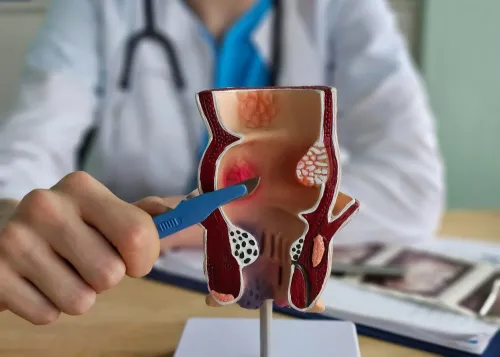
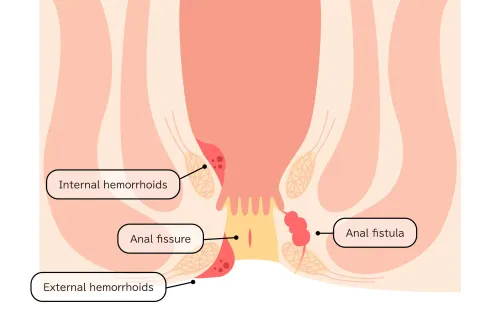
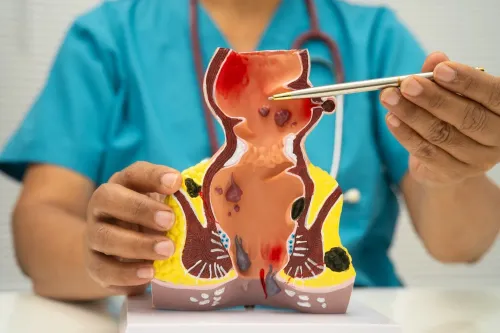
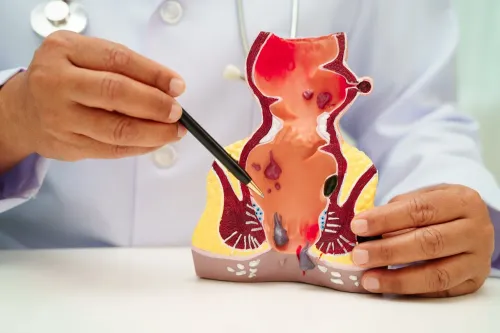
Laser hemorrhoidoplasty candidacy starts with an examination confirming symptomatic internal hemorrhoids, limited-to-moderate prolapse, and a goal of reducing bleeding or hemorrhoidal bulk without excising tissue. Internal versus external hemorrhoids matters: internal cushions arise above the dentate line, while external disease lies under sensitive skin and can form painful clots or bulky tissue.
| Grade | Prolapse finding | Relevance to laser |
|---|---|---|
| I | No prolapse; bleeding may occur | Other office treatments often fit better |
| II | Prolapses during straining but returns by itself | Common laser target when symptoms persist |
| III | Prolapses and needs manual reduction | Selected cases may fit; assess bulk and external tissue carefully |
| IV | Permanently prolapsed and cannot be reduced | Excision or another operation often fits better |
The examination must also identify whether the main problem is bleeding, prolapse, pain, or tissue bulk. Grade II hemorrhoids commonly suit a tissue-preserving approach; selected grade III hemorrhoids do so only when prolapse is limited and the tissue does not require physical removal.
Ask which operation “laser” means. Submucosal laser hemorrhoidoplasty delivers energy beneath the cushions; laser-assisted excision removes tissue. They are not the same procedure.
Laser is a poor match when you have:
- Large external components, major skin tags, advanced circumferential prolapse, strangulated piles, or a thrombosed external hemorrhoid.
- Symptoms caused by an anal fissure, fistula, skin disease, inflammatory bowel disease, polyp, or cancer.
These findings require treatment aimed at the actual cause, not simply coagulation of internal hemorrhoids.
Which hemorrhoid procedure fits the examination findings?
The examination, not persistent symptoms alone, determines the procedure. Laser hemorrhoidoplasty generally suits symptomatic internal grade II and selected grade III hemorrhoids with limited-to-moderate prolapse, when reducing bleeding or bulk matters more than removing tissue.
| Option | What it means | When it applies |
|---|---|---|
| Laser hemorrhoidoplasty | Coagulates and shrinks internal hemorrhoidal tissue | Grade II or selected grade III disease; residual prolapse and later recurrence remain possible |
| Rubber-band ligation | An office band cuts blood flow to an internal hemorrhoid | Common for grade I or II, and selected grade III after conservative care fails; compare laser versus rubber-band ligation rather than treating them as equivalents |
| Sclerotherapy for hemorrhoids | Injected solution scars and reduces suitable internal tissue | Lower-grade internal disease, not substantial external prolapse |
| Infrared coagulation | Heat seals small bleeding points | Suitable lower-grade internal hemorrhoids; it does not remove prolapsing tissue |
| Conventional excisional hemorrhoidectomy | Physically removes hemorrhoidal tissue | Often favored for grade III or IV disease, substantial external tissue, or combined internal and external hemorrhoids |
| Chivate’s Procedure | A separate surgical approach | Suitability depends on grade, prolapse, and internal or external anatomy, not symptoms alone |
Laser may cause less early pain and allow quicker recovery than conventional hemorrhoidectomy, but remaining prolapse can require retreatment. Technique, grade, follow-up, and recurrence data vary across laser studies, so ask for the exact method and expected retreatment risk. The prolapsing tissue must be removed when anatomy, not bleeding, is the main problem.
How is bleeding checked before elective laser treatment?
1. Start with symptom history: record bowel habits, constipation or diarrhea, duration, bleeding pattern, pain, prolapse, discharge, family history, medicines, and previous treatment. Bright-red blood on toilet paper points toward a lower source, while black, tarry stools suggest bleeding higher in the digestive tract; neither color alone proves hemorrhoids.
2. The clinician inspects the anal margin for external hemorrhoids, skin disease, fissure, fistula openings, swelling, or a bluish lump. A digital rectal examination checks tenderness, masses, blood, sphincter tone, and other causes; anoscopy for hemorrhoids then views internal hemorrhoids, bleeding points, and prolapse.
3. Arrange colonoscopy for rectal bleeding when you are due for age-appropriate colorectal screening, have a family history of colorectal cancer or polyps, an unexplained bowel-habit change, iron-deficiency anemia, recurrent bleeding after hemorrhoid treatment, or bleeding that does not match the examination.
This is how clinicians distinguish hemorrhoids versus colorectal cancer and other colon disease; another colon evaluation may be chosen when colonoscopy is unsuitable.
4. An acutely painful bluish lump needs separate assessment for a thrombosed external hemorrhoid. Timing, pain severity, and the choice between conservative care and excision differ from chronic internal prolapse. Fissure symptoms such as sharp pain during bowel movements, or fistula symptoms such as persistent drainage and an opening, also require separate treatment planning.
5. Less bleeding does not mean corrected prolapse. Displaced tissue can remain after bleeding improves, leaving you needing another procedure or surgery because laser treatment has not restored its position.
What should you ask before choosing laser piles treatment?
Bring these questions before laser piles treatment:
- Which exact technique is planned: submucosal laser hemorrhoidoplasty or laser-assisted excision?
- What internal grade is present, and are there external hemorrhoids, skin tags, or circumferential prolapse?
- Is the target bleeding, prolapse, pain, or tissue bulk?
- If prolapse remains after treatment, what procedure follows?
- For this technique and grade, what are the expected rates of pain, urinary difficulty, infection, delayed healing, recurrence, and retreatment? These are the key laser hemorrhoid treatment risks.
- Have a fissure, fistula, thrombosis, inflammatory bowel disease, polyp, cancer, or another bleeding source been excluded?
- Which bowel-habit changes remain necessary for hemorrhoid recurrence prevention?
| Technique | Main target | Limitation to clarify |
|---|---|---|
| Submucosal laser hemorrhoidoplasty | Bleeding and internal tissue bulk | Prolapse can persist because tissue is not fully removed |
| Laser-assisted excision | Prolapsing tissue requiring removal | Recovery and wound-related risks differ |
A specialist-led anorectal examination, such as a specialist hemorrhoid consultation in Nashik at Shree Hospital - 08048060809, is useful when symptoms persist because the decision depends on examination, grade, and anatomy—not the word “laser.”
Choose laser only when the diagnosis, grade, anatomy, and treatment goal align. Choose urgent care for heavy or continuous bleeding, fainting, black stools, fever, pus, severe escalating pain, or newly irreducible prolapse.
Frequently asked questions
When do persistent hemorrhoid symptoms justify a specialist assessment?
Arrange a specialist assessment when bleeding, prolapse, pain, itching, or swelling persists, returns repeatedly, or interferes with daily activities. Seek urgent help for heavy or continuous bleeding, dizziness, fainting, black stools, fever, pus, severe escalating pain, or a newly irreducible prolapse.
What findings make laser hemorrhoidoplasty a reasonable option?
Laser hemorrhoidoplasty can be considered after an examination confirms suitable internal hemorrhoids and excludes other causes of bleeding. Your specialist should explain the grade, size, prolapse pattern, and why laser is preferable to alternatives.
Which hemorrhoid procedure fits the examination findings?
The appropriate procedure depends on hemorrhoid grade, internal or external location, prolapse, bleeding, pain, and previous treatment. Options can include lifestyle treatment, medicines, rubber-band ligation, injection treatment, laser hemorrhoidoplasty, or surgery.
How is bleeding checked before elective laser treatment?
A clinician reviews the bleeding pattern, examines the anus and rectum, and checks for another source when indicated. Depending on your symptoms and medical history, testing can include a blood count, medication review, anoscopy, or further bowel evaluation.
What should you ask before choosing laser piles treatment?
Ask what the examination found, why laser is suitable, which alternatives apply, what symptoms it treats, expected recovery, risks, recurrence, total follow-up plan, and what happens if bleeding continues.