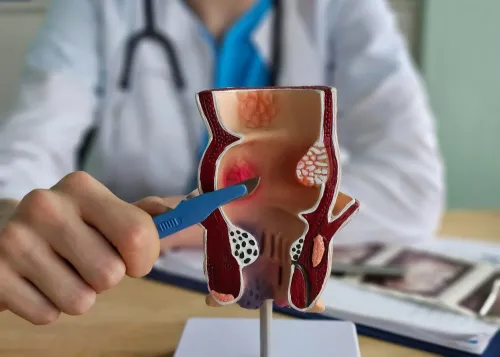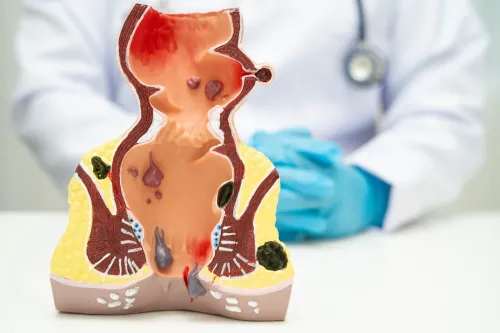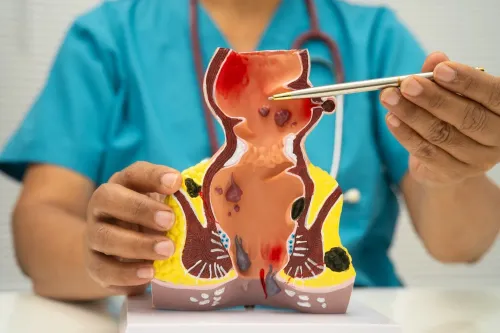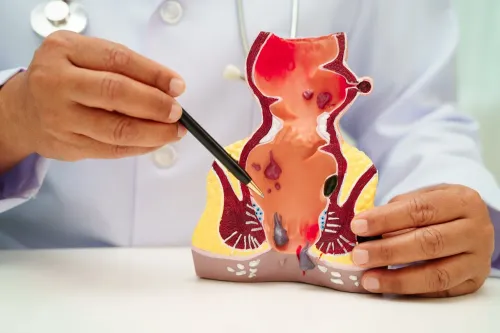
Pain that continues after a bowel movement or bleeding that returns across repeated bowel movements deserves more than repeated self-treatment. You will learn how to recognise a persistent pattern, distinguish fissure symptoms from other causes of rectal bleeding, understand the assessment and conservative-care sequence, and know when a procedure discussion is appropriate.
Key takeaways
- Arrange an assessment when sharp pain or bleeding persists for several weeks.
- Bright-red bleeding can fit a fissure, but heavier or unusual bleeding needs review.
- Seek urgent care for severe pain, fever, dizziness, or black stools.
- Expect an examination and symptom review before choosing fissure treatment.
When pain or bleeding has become persistent
Arrange a fissure assessment if sharp pain continues after bowel movements, bleeding appears with repeated bowel movements, or symptoms recurring over several weeks have not settled with softer stools and less straining.
You do not need to wait for daily symptoms: repeated episodes over two or three weeks justify an appointment, especially when each bowel movement reopens the pain or leaves blood.
- Pain lasts for hours after passing stool instead of easing soon afterwards.
- Bright-red blood appears on toilet paper or the outside of the stool during several bowel movements.
- Symptoms return after briefly improving, or remain despite fibre, fluids, stool-softening treatment, warm baths, and avoiding straining.
- You feel a skin tag or lump at the fissure site.
Think of a chronic anal fissure as one lasting about 6 weeks or longer. At that point, simple dietary measures are less likely to finish the healing process, and a clinician may consider prescription topical treatment.
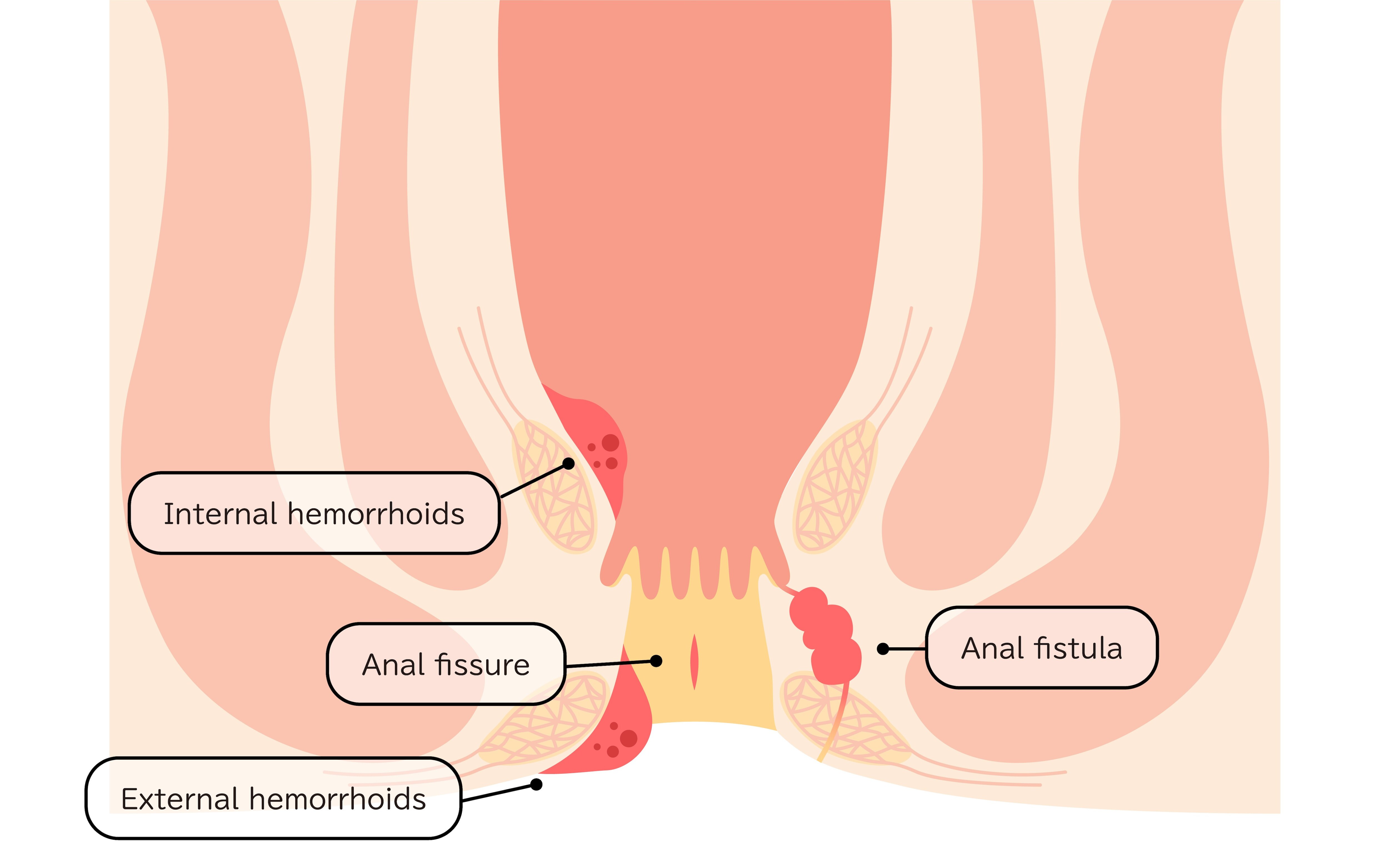
Do not assume persistent pain means a recurrent fissure after apparent healing. A thrombosed external haemorrhoid, abscess, fistula, inflammatory bowel disease, pelvic-floor pain, or nerve-related pain can feel similar.
Seek prompt medical care for heavy bleeding, black or maroon stool, fever, pus, faintness, severe abdominal pain, unexplained weight loss, anaemia symptoms, or a new bowel-habit change.
The bleeding pattern can point beyond a fissure
A fissure is more likely when a small amount of bright-red blood on toilet paper or blood on stool surface appears with sharp pain during or after a bowel movement. The pattern does not prove the source, especially when pain persists after apparent healing or symptoms recur.
| Pattern | Features that point toward it |
|---|---|
| Fissure | Bright-red blood on toilet paper or blood on stool surface, with cutting pain during or after defecation. |
| Haemorrhoids | Bright-red blood without severe pain, blood dripping into toilet water, itching, a lump, or tissue that protrudes. |
| Abscess | Constant, worsening pain, a tender lump, redness, fever, pus, or feeling unwell. This needs prompt assessment; a drainable abscess usually requires drainage, not antibiotics alone. |
| Fistula | Repeated swelling that bursts, ongoing pus or fluid staining underwear, or a small opening near the anus. |
| Inflammatory bowel disease | Blood mixed into stool with diarrhoea, urgency, abdominal cramps, mouth ulcers, or weight loss. |
| Polyps or colorectal disease | Blood mixed into stool, bleeding unrelated to bowel movements, a new change in bowel habit, iron-deficiency anaemia, or unexplained weight loss. |
| Another cause | Maroon or black stool, heavy bleeding, dizziness, fainting, or severe abdominal pain requires urgent evaluation. |
A lateral or multiple fissure, slow healing, or repeated recurrence deserves investigation for Crohn disease, infection, immune suppression, or malignancy rather than automatic repeat fissure treatment. Persistent pain can also come from a thrombosed haemorrhoid, pelvic-floor pain, or nerve-related pain.
Red flags that change the urgency
Seek urgent assessment rather than routine fissure care if bleeding is heavy, ongoing, or accompanied by weakness. Black or maroon stool can indicate bleeding higher in the digestive tract and needs prompt evaluation, especially with dizziness or fainting.
Fever, worsening constant pain, redness, pus, or a painful lump near the anus suggests an abscess or another infection rather than an uncomplicated fissure. Do not rely on antibiotics alone: a drainable abscess often needs prompt surgical drainage.
| Warning pattern | What it may signal | Action |
|---|---|---|
| Heavy bleeding, black or maroon stool, or dizziness or fainting | Significant or higher digestive-tract bleeding | Seek emergency assessment |
| Fever, pus and painful lump near anus, increasing pain, or feeling unwell | Abscess or spreading infection | Arrange same-day medical assessment |
| Severe abdominal pain, unexplained weight loss, anaemia symptoms, or change in bowel habits | Inflammatory bowel disease, polyps, colorectal disease, or another cause | Arrange prompt medical evaluation |
| Multiple, side-positioned, recurrent, or slow-healing fissures | Crohn disease, infection, immune suppression, or malignancy | Request examination and appropriate investigation |
A small streak of bright-red blood after a painful bowel movement is less urgent, but it does not prove a fissure. Seek review if symptoms persist, recur, or fail to improve with stool-softening measures.
What the clinician checks before recommending treatment
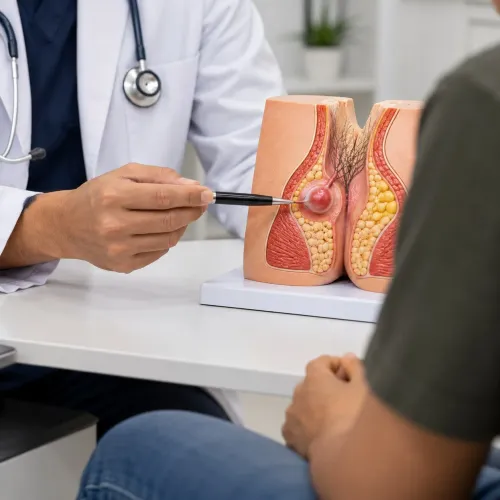
Assessment starts with a symptom history and inspection of the anal opening. The clinician asks when pain begins, how long it lasts after bowel movements, whether bleeding recurs, and what stool pattern or treatments you have tried. A typical fissure is often visible.
1. If pain permits, the clinician performs a digital rectal examination when tolerable, followed by anoscopy when appropriate. Severe pain can trigger internal sphincter spasm and stool withholding, so instrumentation may be postponed; examination under anaesthesia may be considered when the diagnosis remains unclear.
2. If bleeding is atypical—mixed through stool, dark, heavy, or unrelated to defecation—the clinician may arrange a test or referral for atypical bleeding rather than assume a fissure. This helps prevent another cause from being missed.
3. Initial care targets hard stool and repeated trauma: stool softening, adequate fluid and fibre, warm sitz baths, topical medicines such as diltiazem or glyceryl trinitrate, and avoiding straining. These measures reduce sphincter tension while giving the fissure a chance to heal.
Persistent symptoms after a reasonable trial need reassessment, not indefinite self-treatment. Continuing bleeding, worsening pain, or a fissure that repeatedly reopens may lead to discussion of sphincter-relaxing treatment or another procedure.
When a procedure discussion becomes reasonable
A fissure that repeatedly reopens after careful bowel-softening measures deserves a treatment comparison, not repeated identical advice. Discuss escalation when symptoms persist beyond about six weeks, recur after healing, or prevent normal bowel movements.
| Option | What it means | Main trade-off |
|---|---|---|
| Continued conservative care | Fibre, adequate fluids, stool-softening treatment, warm baths, and recovery and constipation prevention | Safest for continence, but less reliable for an established chronic fissure |
| Topical glyceryl trinitrate | Relaxes the internal anal sphincter to support healing | Headaches are common; healing can fail or the fissure can recur |
| Topical diltiazem or nifedipine | Provides a similar sphincter-relaxing effect with fewer headaches than glyceryl trinitrate | Requires consistent application and follow-up |
| Botulinum toxin injection | Temporarily weakens the internal sphincter without cutting it | Less predictable healing and more recurrence, but useful when continence risk matters |
| Lateral internal sphincterotomy | Divides part of the internal sphincter for the most durable healing in suitable patients | Offers the highest durable healing rate but can alter control of gas or stool |
| Tailored sphincterotomy | Limits the divided muscle length to balance healing with continence protection | Requires careful patient selection and surgical technique |
Previous obstetric sphincter injury, existing leakage, older age, or other sphincter damage strengthens the case for a sphincter-preserving option. For specialist fissure treatment in Nashik, ask Shree Hospital - 08048060809 how examination findings, prior treatments, and your continence risk change the recommendation.
Related service
Other Surgies Chronic anal fissures can cause intense pain, discomfort, and difficulty during daily activities like sitting or passing stool. View service → |
Frequently asked questions
When should persistent fissure pain or bleeding be assessed?
Arrange an assessment when sharp pain continues after bowel movements, bleeding recurs, or symptoms persist for several weeks despite softer stools and less straining.
What bleeding pattern can point beyond an anal fissure?
Bright-red blood on toilet paper or the stool surface can occur with a fissure. Heavy bleeding, black or tarry stools, blood mixed through the stool, or bleeding with other concerning symptoms needs clinical review.
Which symptoms make fissure bleeding more urgent?
Severe or worsening pain, fever, dizziness, faintness, weakness, heavy bleeding, or black stools require urgent medical attention.
What does a clinician check before recommending fissure treatment?
The clinician reviews pain timing, bleeding, bowel habits, constipation, previous treatment, and recurrence, then examines the anal area to assess the likely cause and severity.
When is discussing a fissure procedure reasonable?
A procedure discussion becomes reasonable when symptoms persist or recur despite appropriate non-procedural care, or when examination suggests a chronic fissure requiring specialist treatment.