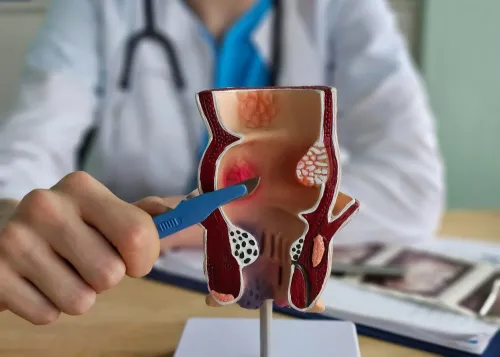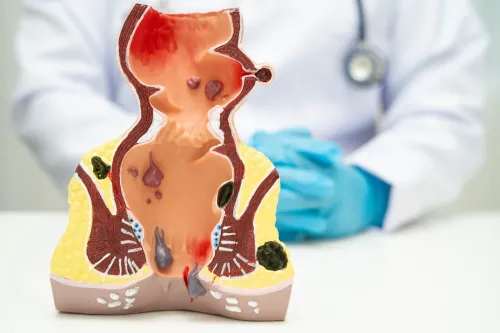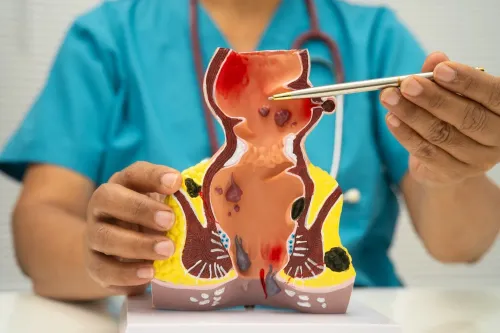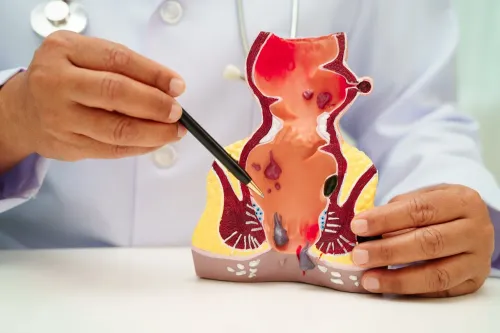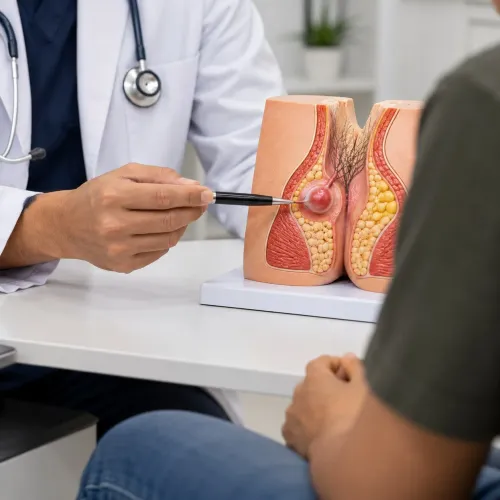
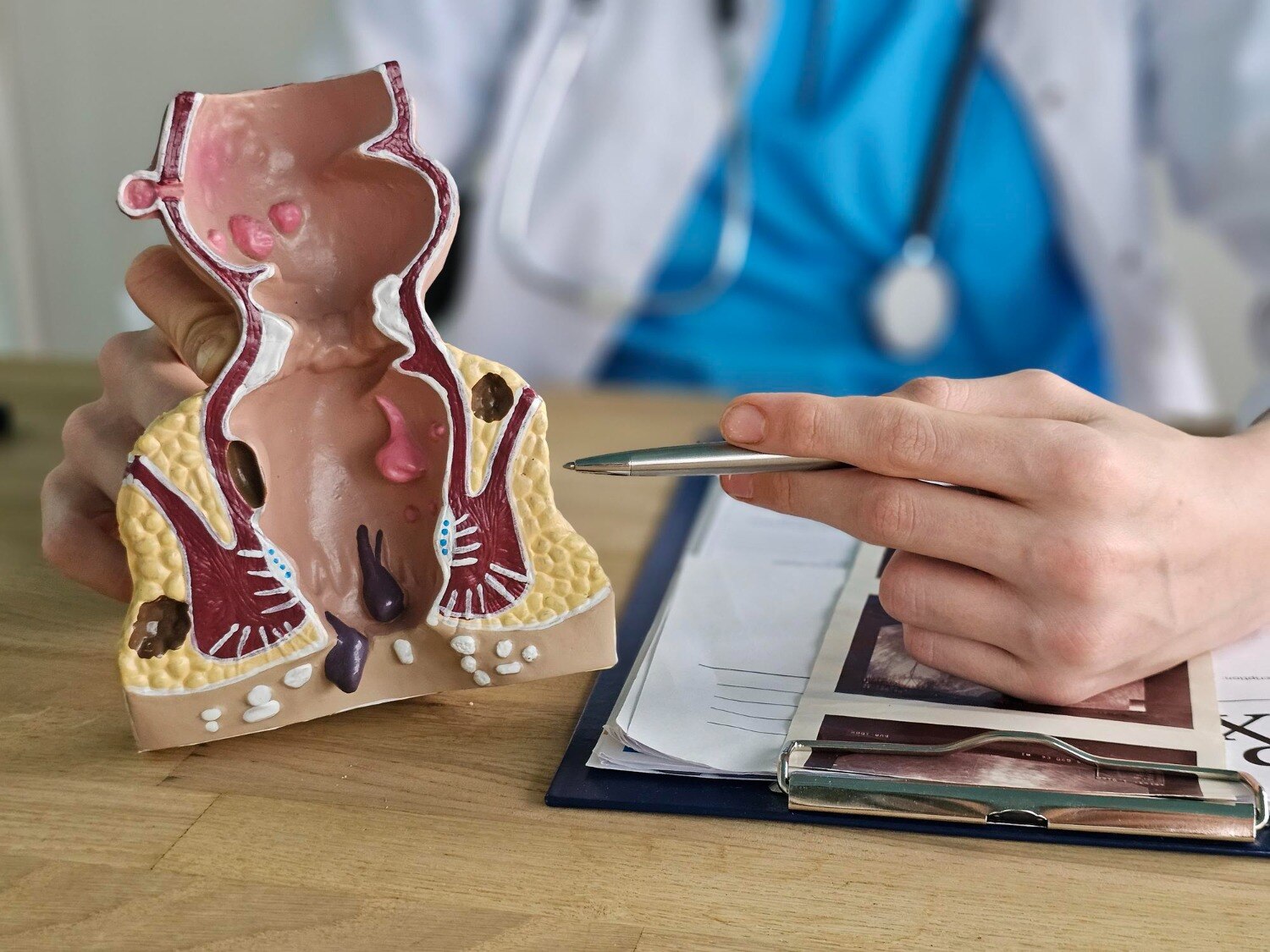
Bright-red bleeding, pain during bowel movements, a draining opening, or a lump near the anus can come from very different conditions. By matching symptom patterns with the right examination and testing, you can understand which problems an anorectal clinic treats, when self-care is reasonable, and when a procedure or urgent assessment is needed.
Key takeaways
- Bright-red bleeding with a lump does not confirm hemorrhoids.
- Seek urgent examination for heavy bleeding, faintness, fever, or severe worsening pain.
- Diagnosis may include history, inspection, digital examination, and anoscopy.
- Start with appropriate diet, medicines, and hygiene before considering procedures.
Which conditions are commonly assessed at an anorectal clinic?
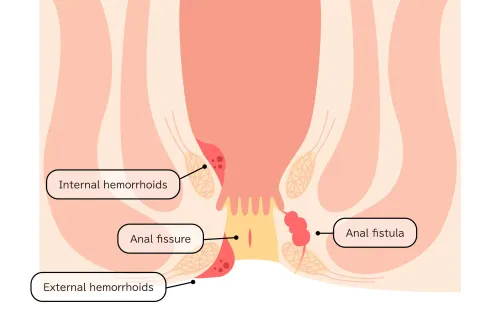
Bright-red rectal bleeding with a lump does not prove hemorrhoids. An anorectal clinic commonly assesses:
- Internal hemorrhoids and external hemorrhoids
- Anal fissure
- Fistula-in-ano and perianal abscess
- Pilonidal disease
- Anal itching, rectal bleeding, and anal skin tags
- Constipation-related anorectal problems
- Rectal prolapse, anogenital warts, and thrombosed external hemorrhoids
A laser anorectal clinic is not limited to laser procedures. Pilonidal disease affects the natal cleft near the tailbone, not the anal canal; a painful pilonidal abscess is a separate problem from an anal abscess. Rectal prolapse can also resemble prolapsing hemorrhoids, so the distinction matters.
The practical distinction is fistula-in-ano symptoms versus hemorrhoids and abscesses:
| Condition | Pattern that raises suspicion | Important distinction |
|---|---|---|
| Internal hemorrhoids | Bright-red bleeding or tissue that prolapses | Grade and prolapse pattern guide treatment |
| External hemorrhoids | Anal-margin lump, discomfort, or a sudden bluish painful lump | A thrombosed external hemorrhoid is not an internal hemorrhoid |
| Anal fissure | Sharp, cutting pain during and after stool passage | Pain is usually linked closely to bowel movements |
| Fistula-in-ano | Recurrent opening with continuous or intermittent pus drainage | Often follows an abscess and forms a tract to the skin |
| Perianal abscess | Constant, worsening pain with swelling, warmth, or fever | Infection may require drainage |
Examination may also investigate unexplained bleeding, altered bowel habits, or other causes beyond piles, including conditions needing colonoscopy or further testing.
Which anorectal symptoms need prompt or urgent examination?
Stop self-treating and seek same-day assessment by a colorectal or general surgeon for urgent anorectal symptoms, especially when infection or significant bleeding is possible.
- Fever with anal swelling
- Severe constant pain or pain that is rapidly worsening
- Redness spreading around the anus
- Difficulty passing urine
- Feeling faint, dizzy, or systemically unwell
- Heavy rectal bleeding
- A painful lump that appeared suddenly
| Lump | What it may indicate | What usually happens |
|---|---|---|
| Perianal abscess | A pus-filled infection causing constant pain, swelling, or fever | Prompt drainage is generally required |
| Thrombosed external hemorrhoid | A sudden, painful bluish lump at the anal margin | Early severe cases may need excision; later or milder cases often receive analgesia, stool-softening treatment, and observation |
Antibiotics alone do not usually replace drainage for an abscess. A clinician may add them when cellulitis, systemic illness, immunosuppression, or another high-risk feature is present.
Do not label persistent or unexplained bleeding as piles. Rectal bleeding warning signs include altered bowel habits, iron-deficiency anemia, weight loss, or a mass; these require evaluation for colorectal cancer and other causes, sometimes with colonoscopy.
Recurrent perianal abscesses, multiple fistula openings, chronic diarrhea, abdominal pain, or unexplained weight loss warrant assessment for Crohn’s disease and fistula. Treating the local fistula alone can fail if inflammatory bowel disease remains unrecognized.
How does the clinician determine the diagnosis?
The clinician begins with your symptom history: bleeding, pain, drainage, itching, bowel changes, prolapse, fever, and how long each problem has lasted. Bright-red blood alone does not prove hemorrhoids.
1. Inspection shows the anal margin and natal cleft directly. It can reveal fissures, external lumps, skin tags, prolapsing tissue, fistula openings, warts, abscess-related swelling, and pilonidal disease.
2. A digital rectal examination checks tenderness, masses, sphincter tone, blood, and abnormalities inside the anal canal. Severe pain can limit this step, especially with an acute fissure or abscess.
3. Anoscopy examines the lower anal canal, while proctoscopy provides a broader view of the rectum when appropriate. These instruments can identify internal hemorrhoids, bleeding points, inflammation, ulcers, and prolapsing tissue.
Internal hemorrhoids are graded by prolapse:
- Grade I bleeds but does not prolapse.
- Grade II prolapses with straining and reduces spontaneously.
- Grade III prolapses and requires manual reduction.
- Grade IV remains prolapsed and cannot be reduced.
A concentric, folded mass suggests full-thickness rectal prolapse; separate columns suggest prolapsing hemorrhoids. The distinction can change the recommended operation.
Further testing has a specific purpose. MRI pelvis for fistula-in-ano or endoanal ultrasound helps map a complex or high fistula, recurrent disease, or unclear anatomy. Colonoscopy is useful for unexplained bleeding, altered bowel habits, anemia, weight loss, or cancer concern. Blood tests check for anemia, infection, or inflammatory disease.
What treatment comes before, and when are procedures appropriate?
Treatment follows the diagnosis and anatomy, not the presence of a laser. Initial care can include more fibre and fluids, stool-softening medicine or laxatives, warm sitz baths, topical medicines, and observation when symptoms are likely to settle.
- Treat an acute anal fissure with these measures first, often adding glyceryl trinitrate or a topical calcium-channel blocker. A persistent fissure may need botulinum toxin or lateral internal sphincterotomy; laser treatment is not standard first-line care.
- Use rubber-band ligation for many symptomatic grade I and II internal hemorrhoids and selected grade III disease. It does not treat every external lump or explain every cause of bleeding. The laser hemorrhoidoplasty indications and limits depend on symptoms, prolapse, external components, and patient preference; it is not automatically better than banding or conventional surgery. Large external disease, advanced prolapse, or recurrence can require hemorrhoidectomy.
- For fistula-in-ano, determine how much sphincter the tract crosses. Fistulotomy for simple fistula-in-ano suits many low tracts, while a seton, laser ablation, Chivate’s procedure, or Ksharsutra may protect continence in complex or high tracts. Laser closure does not suit every anatomy.
- Drain an abscess before attempting fistula closure. A pilonidal abscess in the natal cleft near the tailbone also needs incision and drainage, not an interchangeable anorectal laser procedure.
A sudden painful bluish lump may be a thrombosed external hemorrhoid, while continuous pus suggests a fistula or abscess. The examination determines which treatment is appropriate.
How should you choose an anorectal clinic for assessment and treatment?
Choose a clinic that starts with a specialist anorectal examination, not a laser promise. Ask which diagnosis the examination established and whether the findings justify a procedure at all. A laser label does not replace examination, appropriate testing, or treatment matched to anatomy.
- Ask for the hemorrhoid grade, or the fistula’s location, openings, and tract anatomy.
- If you have a fistula, ask whether the tract crosses the anal sphincter and how continence will be protected.
- Ask why laser is preferable to medication, observation, rubber-band ligation, drainage, or conventional surgery.
- Ask what happens if an abscess is found, and whether you need MRI pelvis, endoanal ultrasound, colonoscopy, or blood tests.
- Ask how recurrence and continence risks are monitored and exactly what post-treatment follow-up includes.
| Option | What it means | When it applies |
|---|---|---|
| Medication or observation | Non-operative care | Mild symptoms or conditions likely to settle |
| Rubber-band ligation | Office treatment for internal hemorrhoids | Many grade I–II and selected grade III cases |
| Drainage | Releases infected pus | An abscess; laser closure does not replace drainage |
| Conventional surgery | Removes or opens diseased tissue | Advanced prolapse, complex fistula, or unsuitable anatomy |
| Laser procedure | A technique requiring case selection | Only when examination supports its benefit |
Shree Hospital - 08048060809 in Nashik is one option for specialist evaluation; use the same questions to compare any clinic.
Fever, constant worsening pain, swelling, spreading redness, urinary difficulty, heavy bleeding, dizziness, or feeling unwell needs prompt assessment, not a delayed elective laser appointment.
Related services
Pile Fissure and Fistula Living with an anal fistula can be painful, uncomfortable, and emotionally distressing. View service → |
Other Surgies Chronic anal fissures can cause intense pain, discomfort, and difficulty during daily activities like sitting or passing stool. View service → |
Frequently asked questions
Which conditions are commonly assessed at an anorectal clinic?
An anorectal clinic commonly evaluates hemorrhoids, anal fissures, fistulas, perianal abscesses, pilonidal disease, anal itching, rectal bleeding, and other causes of anal or rectal pain and lumps.
Which anorectal symptoms need prompt or urgent examination?
Arrange prompt assessment for persistent bleeding, a new lump, ongoing pain, discharge, or altered bowel habits. Seek urgent care for heavy bleeding, faintness, black stools, fever with anal pain or swelling, or rapidly worsening symptoms.
How does a clinician determine the diagnosis?
The clinician reviews your symptoms, bowel habits, medicines, and medical history, then examines the area. The assessment can include a digital rectal examination, anoscopy, and further tests when the findings require them.
What treatment comes before procedures for anorectal conditions?
Treatment often begins with fibre and fluids, avoiding straining, regular bowel habits, warm baths, and prescribed medicines. Procedures become appropriate when symptoms persist, complications develop, or examination identifies a condition that needs intervention.
How should you choose an anorectal clinic for assessment and treatment?
Choose a clinic with trained anorectal or colorectal clinicians, clear diagnostic steps, access to appropriate examination and testing, transparent procedure advice, and follow-up after treatment.
Related services
Pile Fissure and Fistula Anal fistula is a painful and recurring condition that can affect your comfort, confidence, and daily routine. View service → |
Pile Fissure and Fistula Piles (hemorrhoids) can cause discomfort, pain, and embarrassment, affecting your daily life and confidence. View service → |
Pile Fissure and Fistula Ksharsutra Treatment for Fistula An anal fistula is a painful and recurring condition that can significantly affect daily life and comfort. View service → |
Pile Fissure and Fistula Piles (hemorrhoids) can become severe and difficult to manage when symptoms like pain, bleeding, and swelling persist despite medication or... View service → |